BECI 765 kV:
What Wisconsin Residents Need to Know
A proposed 190-mile, 765-kilovolt transmission line could reshape communities, farmland, ecosystems, and energy decision-making across southern Wisconsin. Residents deserve more than a chance to choose between possible routes—they deserve a transparent, public examination of whether this massive project is necessary, equitable, and truly in Wisconsin’s best interest.
What We Know about the BECI 765kV Transmission Line
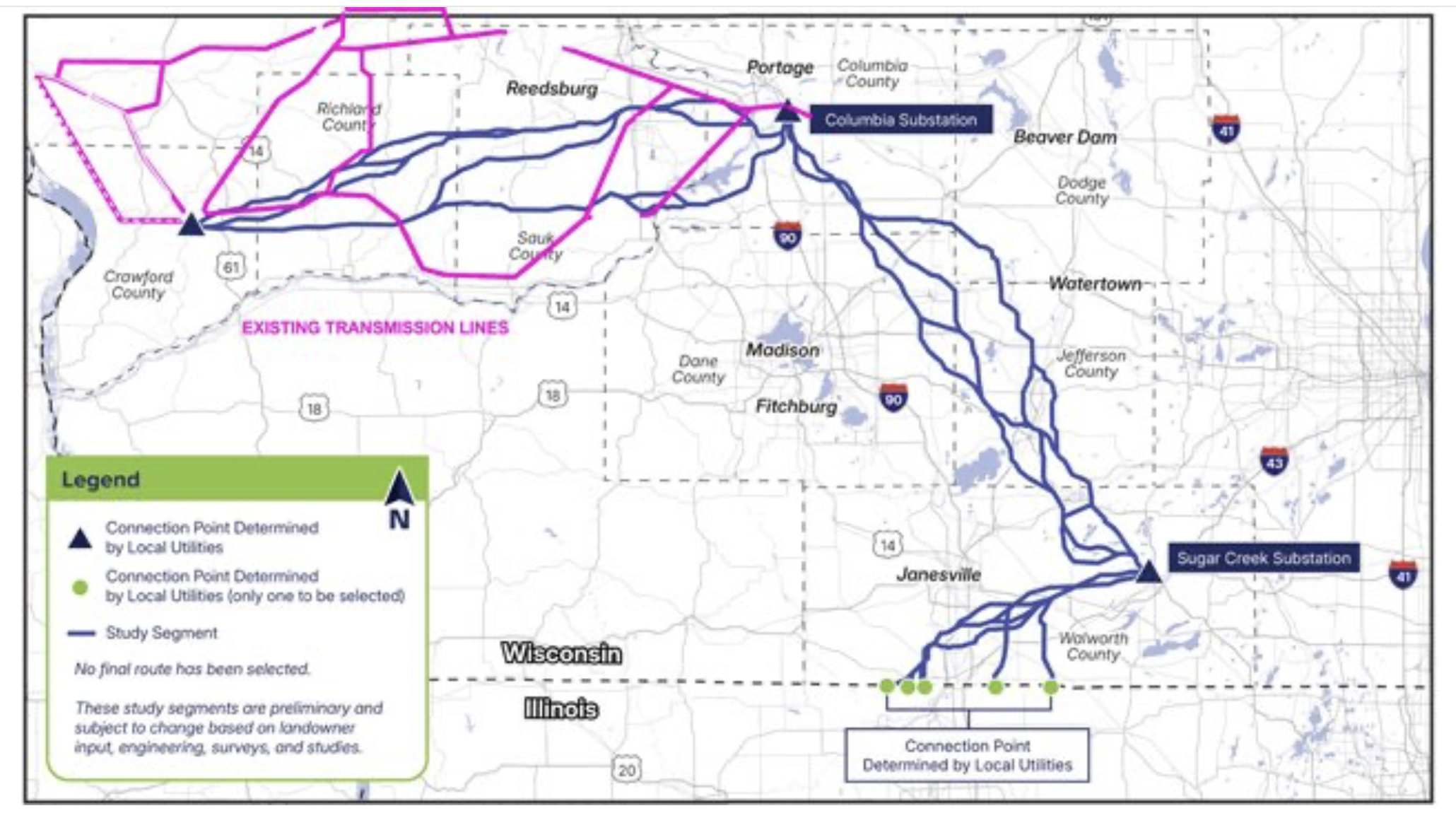
Proposed Connections: Bell Center–Columbia–Sugar Creek–Illinois/Wisconsin State Line, or BECI — the name of the proposed project.
Current Stage:
Early study-segment and route-development phase; no final route selected
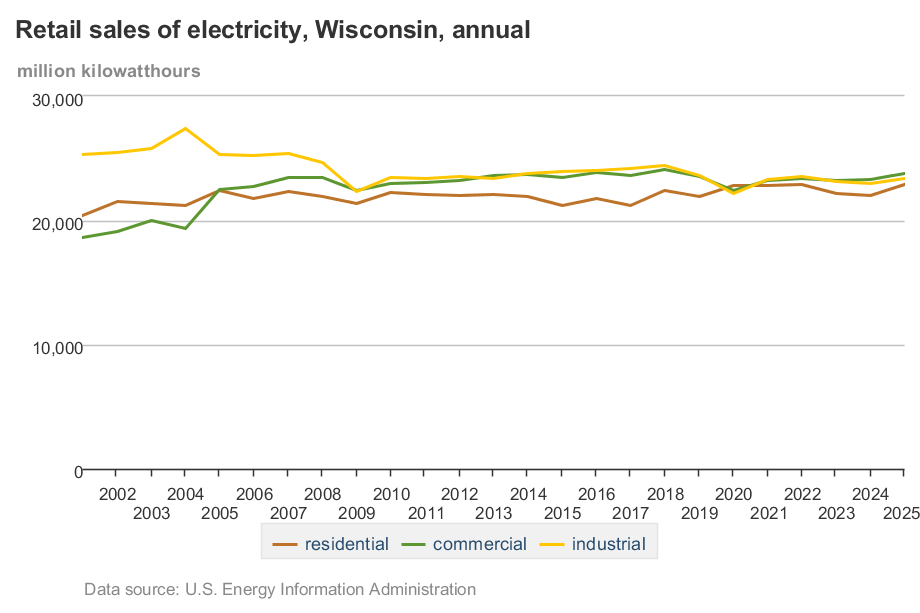
Wisconsin historical retail sales of electricity does not support this buildout.
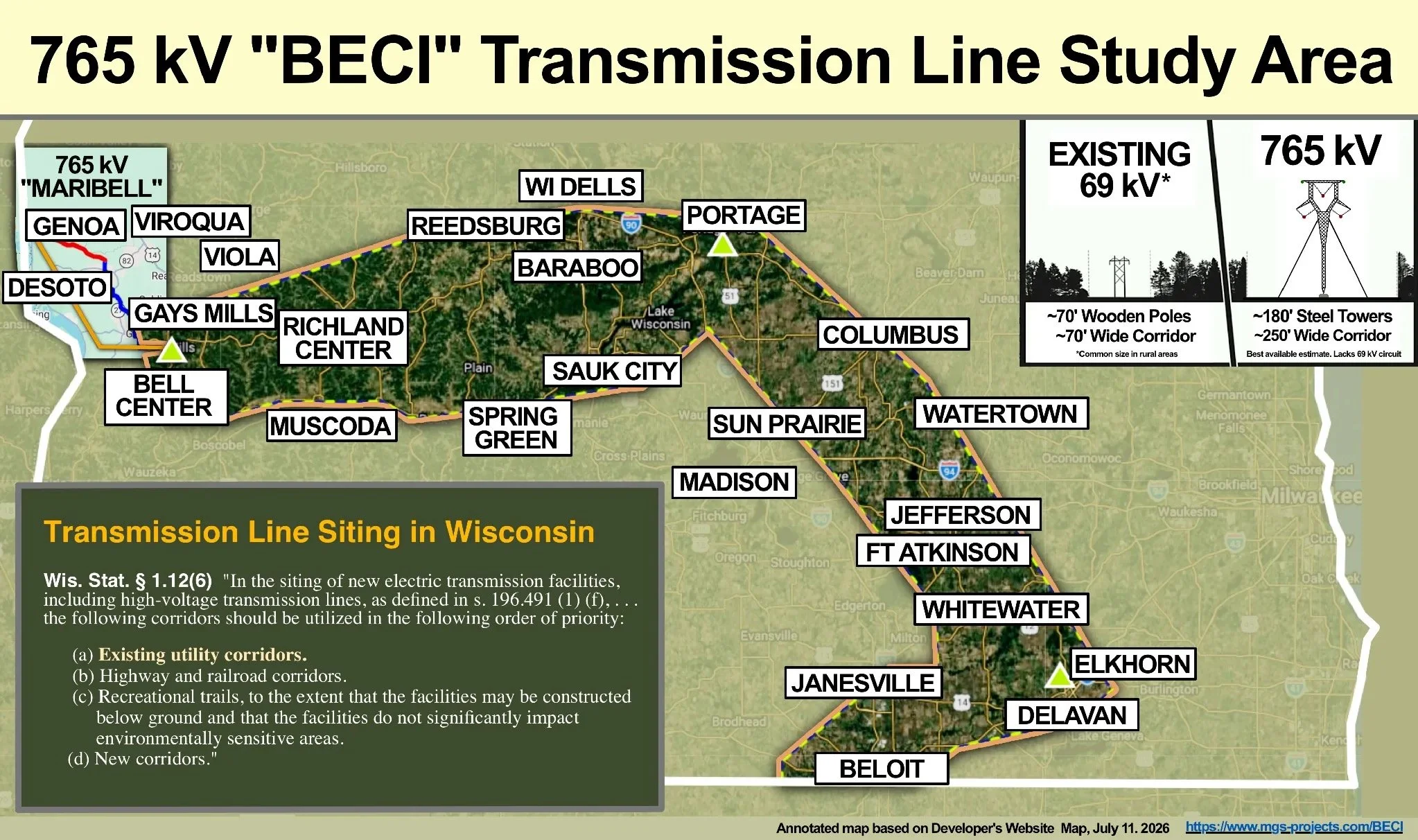
9 counties.
190 miles.
Proposed routes to be studied follow shortest distance, rather than existing infrastructure routes.
Estimated cost: $1.2 billion
Estimated impacted landowners by proposal: ~134,000
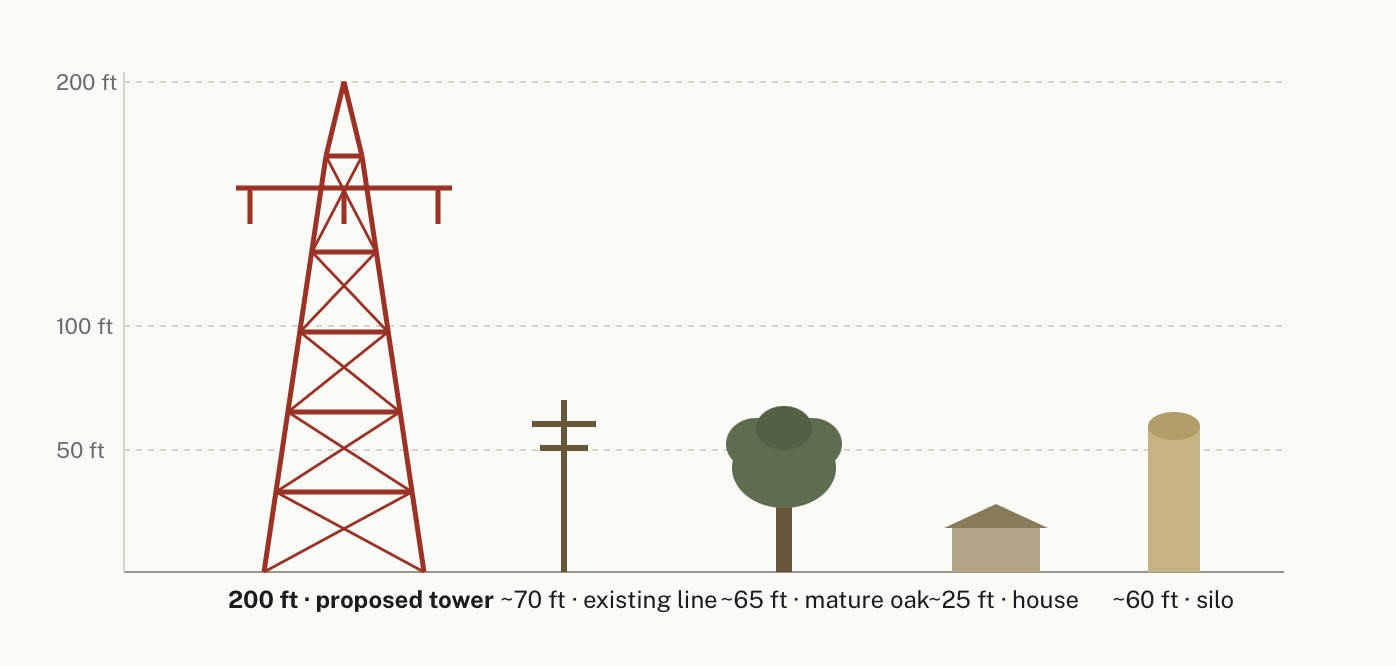
Midcontinent Grid Solutions, a joint venture of Transource Energy and BHE Transmission estimates that the proposed transmission towers will be 150-200 feet tall.
-
BECI is a proposed new, single-circuit 765-kV electric transmission line through southern Wisconsin, extending roughly 190 miles from Bell Center through the Columbia and Sugar Creek areas to the Illinois state line. It is part of MISO’s Long-Range Transmission Planning process and is being developed by Midcontinent Grid Solutions.
-
Transmission lines are the highways that our electricity travels through before making its way to substations that meter it out along local distribution lines, in order to bring electricity to our communities and homes.
A transmission line does not generate electricity. It is the high-voltage backbone that moves large amounts of electricity between regions. In simple terms: power plants make electricity; transmission lines move it long distances; local distribution lines carry it from substations to homes and businesses.
-
This would be a much larger class of transmission infrastructure than ordinary local power lines. Large-scale lines require a long, continuous corridor, can affect multiple counties and landowners, and may permanently shape future land-use and energy-development decisions along the route.

Midcontinent Grid Solutions (MGS) plans to submit their proposal to the Wisconsin Public Service Commission (PSC) early 2027. They hope to be in-service by June 1, 2034.
MGS says BECI is intended to improve regional reliability, move more power across the Upper Midwest, accommodate load growth, and support future generation interconnection.
-
1. Wisconsin communities may carry the impacts.
2. “Reliability” should not end the conversation.
3. Route selection is not the same as public consent.
4. The project needs a full public-interest analysis.
5. Lack of protections for landowners and rate.
6. Wisconsin communities should be able to choose for Wisconsin. Current legislation prevents this.
-
Communities should not be treated as blank space on a regional transmission map. Before routes are chosen, decision-makers must fully account for homes, farms, waterways, habitat, cultural resources, local planning, and the cumulative burden placed on communities already hosting major infrastructure.
-
The developer’s case is that the line will support reliability, resilience, power transfers, load growth, and future generation. Those may be legitimate goals—but they do not automatically prove that this particular line, at this scale, on this corridor, is the least-cost, least-harmful, and most publicly beneficial solution.
-
What specific reliability problem does BECI solve, where, and by when?
How much of the capacity is tied to projected demand growth, including potential large new industrial loads or data centers?
With electricity retail sales declining, what is the purpose and who is the intended customer for the increased capacity?
Who will use the line, and who will pay for it?
What alternatives were considered, including local generation, energy efficiency, storage, upgraded existing corridors, distributed energy, and smaller transmission investments?
What benefits remain in Wisconsin versus flowing through Wisconsin to regional markets?
What is the full expected cost to Wisconsin customers, including upgrades beyond the line itself?
How was the benefit return per dollar invested determined?
-
“Avoid my property” is not the only valid public comment. You can ask whether the project is needed, whether alternatives were adequately studied, whether the costs are fair, and whether the proposed process genuinely protects communities and the public interest.
A process that asks residents to identify preferred or less harmful corridors can be useful, but it can also narrow the public conversation too early. People should be able to say more than “put it somewhere else.”
-
A responsible review must weigh cumulative environmental, agricultural, community, and economic impacts—not just engineering feasibility. This should include:
Prime farmland, drainage systems, soil compaction, and farm operations
Wetlands, streams, forests, grasslands, and wildlife habitat
Homes, neighborhoods, viewsheds, property use, and community character
Tribal consultation and cultural-resource protection
Environmental-justice and cumulative-impact concerns
Alternatives that reduce harm and need for new long-distance infrastructure
Long-term public costs and who benefits financially
Cost - Benefit Analysis
Potential benefits claimed
Public-interest concerns to examine
Support for reliability and resilience
Whether Wisconsin communities bear impacts for benefits that primarily accrue elsewhere
Greater ability to move electricity across the region
The evidence for the specific need, timeline, and size of the proposed line
Ability to connect future generation resources
Whether the line will accelerate genuinely clean, local, and affordable energy—or primarily serve speculative load growth
Potentially more flexibility during outages or extreme weather
Whether lower-impact alternatives could provide comparable reliability benefits
Regional grid capacity for future demand
Whether future demand actually warrants increased grid capacity and if the ratepayers and landowners will be protected.
A new transmission backbone for the Upper Midwest
If the route follows preexisting infrastructure routes and what harms utilizing a new route could potentially cause to farms, homes, habitat, water, and local communities
Wisconsin can support a reliable, affordable, clean electric system without giving utilities and regional planners a blank check. The test is not whether transmission can provide benefits. The test is whether this proposal has demonstrated that it is necessary, fairly financed, transparently planned, and less harmful than realistic alternatives.
What Residents Can do Right Now

Review the study segments
The developer is currently seeking input on broad study segments before it develops preliminary route alternatives. Review the interactive map, identify nearby homes, farms, waterways, habitat, schools, cultural sites, local businesses, and other resources, and document concerns in writing. The current developer comment deadline is September 7, 2026.
Attend a Developer Open House
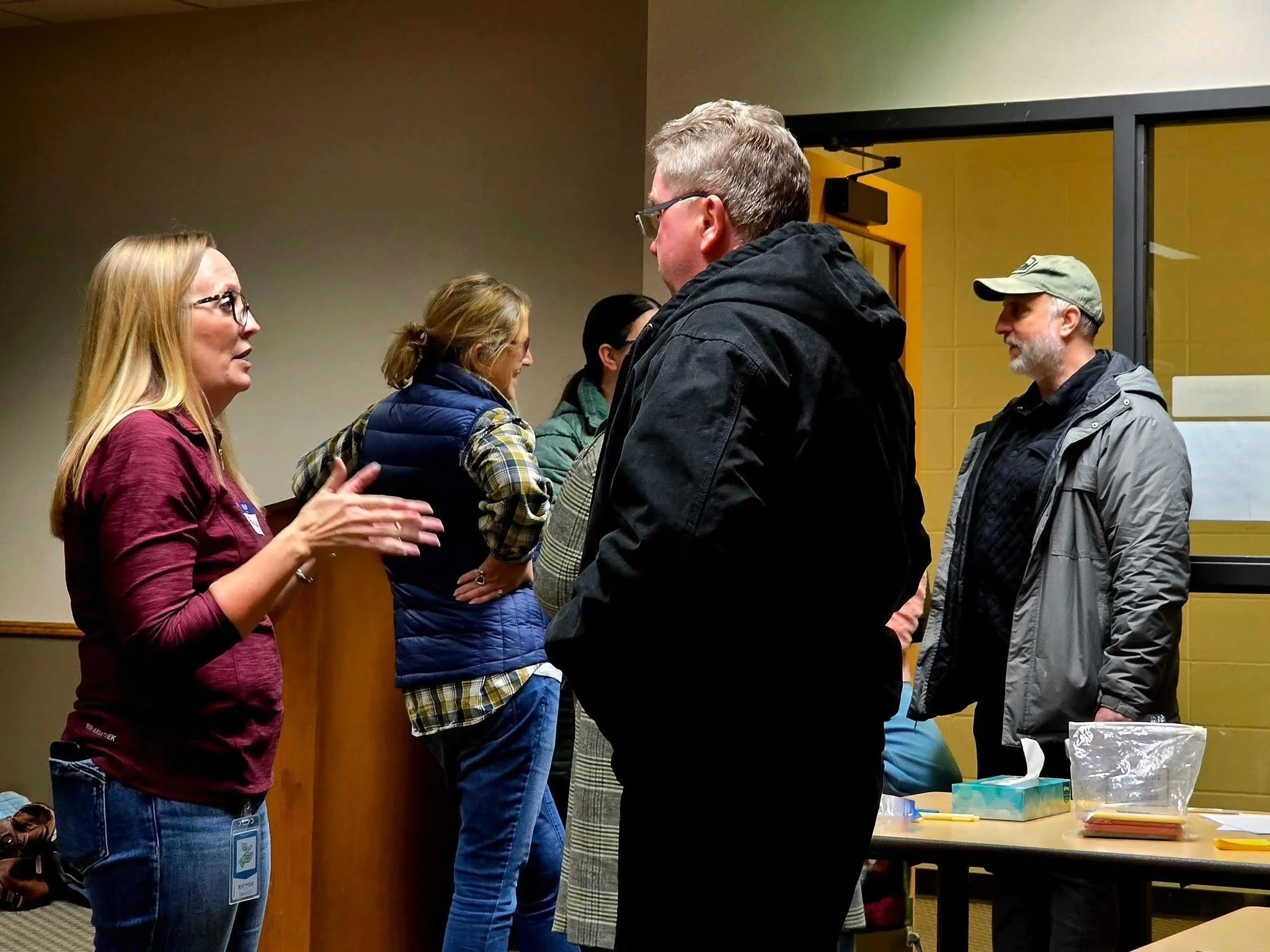
Midcontinent Grid Solutions is hosting 8 open houses while collecting public comments.
If we can impart one piece of advice, it’s this:
Go.
Show up. Ask questions. Document everything.
Submit your comment to MGS about the proposed routes
This is a developer/project comment—not yet a PSC comment for the official case record.
Be sure to include your
City, town, county, or general relationship to the area
The specific study segment or nearby landmark affected
Concrete local impacts or resources that should be avoided
Any route alternatives or constraints you believe must be evaluated
Questions you want answered before a route is advanced
A request that your concerns be carried forward into the PSC application and environmental review.
And like we said before, DOCUMENT EVERYTHING.
Prepare for the PSC case
When a formal application is filed, the Public Service Commission of Wisconsin will open a docket. That is when public comments can be filed for the record during an announced open comment period. The PSC says it considers these comments in its decision-making process; comments can generally be filed online during an open period or mailed with the docket number clearly included.
A comment to the developer and a comment to the PSC are not the same thing. Submit concerns now so they are documented during route development, and can be pointed to during PSC proceedings — but plan to submit them again through the PSC once the official docket and comment period open.
Know the law
There are many state laws regarding utilities and transmission, here are a few for you to look over. It is always valuable to know the law regarding land use, utilities, and infrastructure buildout.
196.491(3)(d)2. The proposed facility satisfies the reasonable needs of the public for an adequate supply of electric energy.
196.491(3)(d)3. The design and location or route is in the public interest considering alternative sources of supply, alternative locations or routes, individual hardships, engineering, economic, safety, reliability and environmental factors
196.491(3)(d)3m. For a high-voltage transmission line, as defined in s. 30.40 (3r), that is to be located in the lower Wisconsin state riverway, as defined in s. 30.40 (15), the high-voltage transmission line will not impair, to the extent practicable, the scenic beauty or the natural value of the riverway.
196.491(3)(d)3r. For a high-voltage transmission line that is proposed to increase the transmission import capability into this state, existing rights-of-way are used to the extent practicable and the routing and design of the high-voltage transmission line minimizes environmental impacts in a manner that is consistent with achieving reasonable electric rates.
196.491(3)(d)3t. For a high-voltage transmission line that is designed for operation at a nominal voltage of 345 kilovolts or more, the high-voltage transmission line provides usage, service or increased regional reliability benefits to the wholesale and retail customers or members in this state and the benefits of the high-voltage transmission line are reasonable in relation to the cost of the high-voltage transmission line.
196.491(3)(d)4. The proposed facility will not have undue adverse impact on other environmental values such as, but not limited to, ecological balance, public health and welfare, historic sites, geological formations, the aesthetics of land and water and recreational use.
196.491(3)(j) Any person whose substantial rights may be adversely affected or any county, municipality or town having jurisdiction over land affected by a certificate of public convenience and necessity for which an application is filed under par. (a) 1. may petition for judicial review, under ch. 227, of any decision of the commission regarding the certificate.
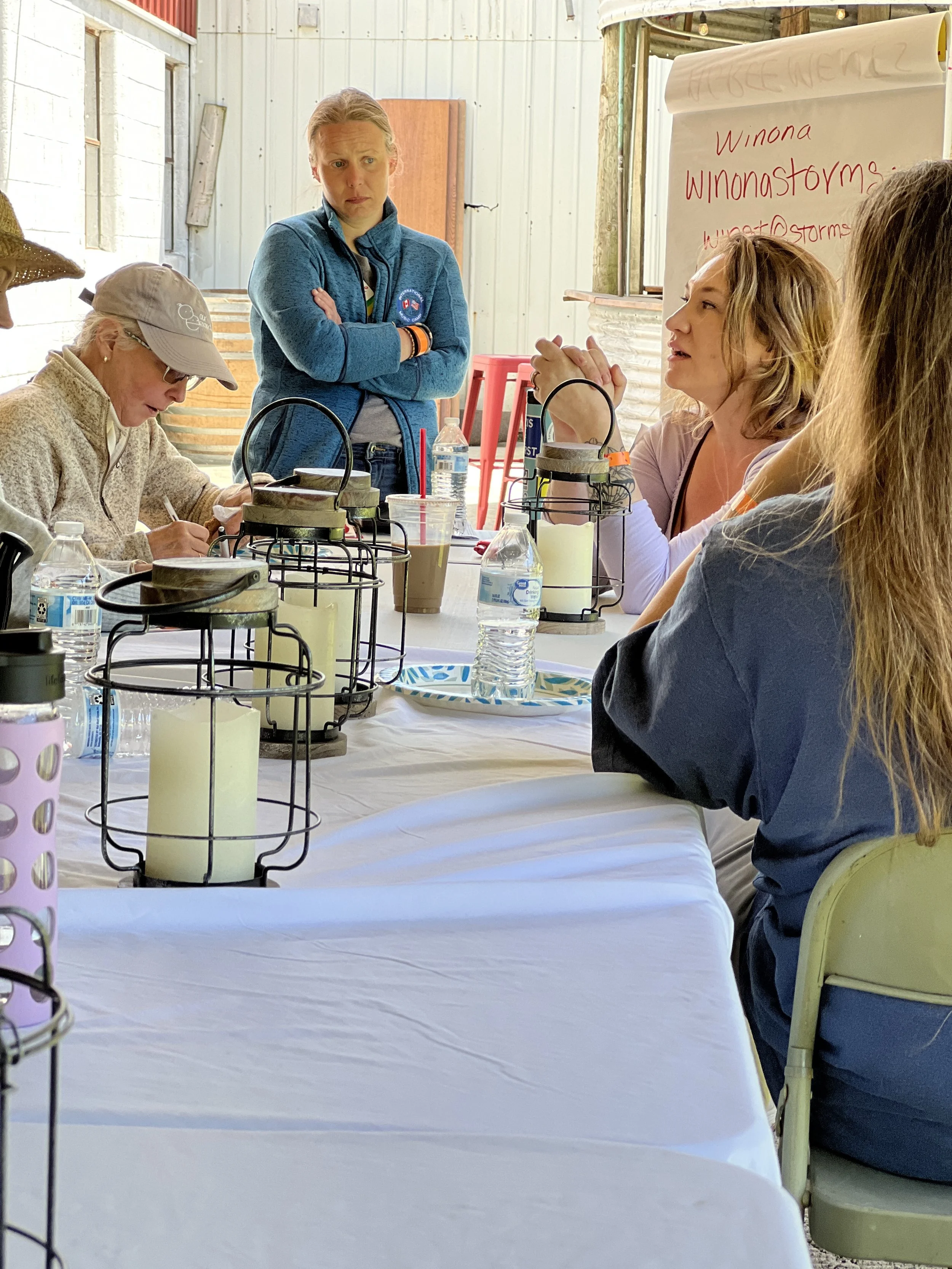
And most importantly, stay informed and organize locally
Sign up for project and PSC docket updates.
Connect with groups organizing for residents, ratepayers, and business owners. No765Line is an excellent resource and organization to partner with.
Attend open houses, town meetings, and future PSC hearings.
Talk with neighbors, farm organizations, local officials, conservation groups, and community organizations.
Ask municipal leaders to request complete information about route impacts, emergency planning, agricultural mitigation, environmental review, and public costs.
Preserve evidence: photos, maps, drainage information, well locations, farm-operation details, wildlife observations, and written documentation of local concerns.
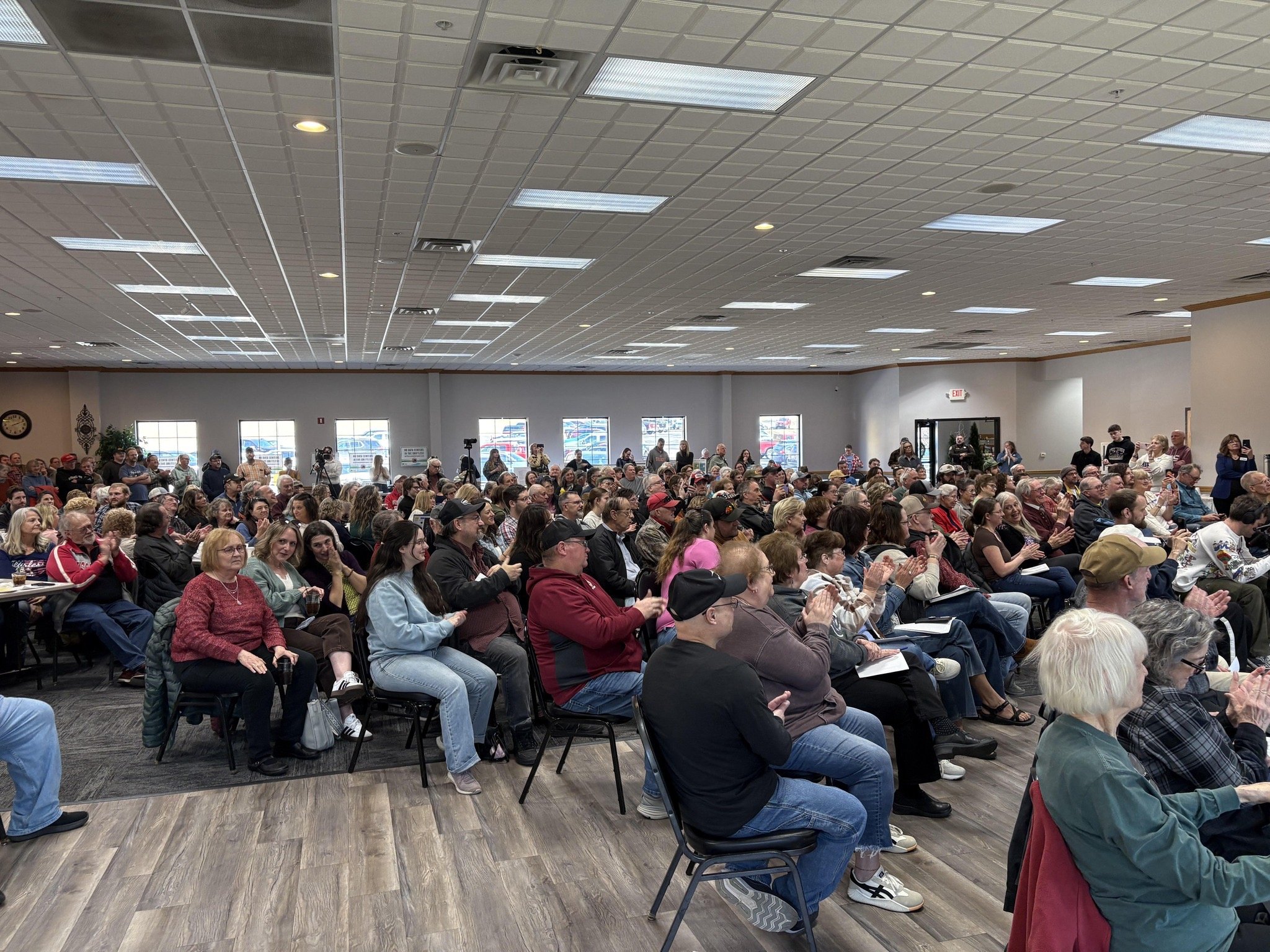
How to Comment to the PSC
The PSC is the state agency that will evaluate a formal BECI application. At the time of this page’s publication, BECI is still in early route planning and no final route has been selected. When the formal PSC docket opens, residents should submit comments directly to the PSC during its announced public-comment period.
How the PSC process works
The developer files an application with the PSC.
The PSC opens a docket and posts case materials, schedules, notices, and filing information.
The PSC may hold public hearings and establish a public-comment deadline.
Residents can submit a written comment “for the record” online or by mail, following the docket-specific instructions.
The PSC Commissioners ultimately decide whether and under what conditions to approve the project.
The PSC’s case systems allow the public to review docket materials and subscribe for updates. People and organizations with substantial interests affected by a case may also seek formal intervenor status; a granted intervenor can present evidence, question witnesses, and file briefs
A strong PSC comment includes
Your connection to the affected community
The docket number and project name
A clear request—for example, deny, require stronger analysis, select a lower-impact alternative, or impose conditions
Specific facts about local conditions and impacts
Questions the PSC must answer before approving the project
Supporting documents, maps, photographs, expert reports, or local records when available
PSC comment template:
Re: PSC Docket [insert docket number] — BECI 765-kV Transmission Project
I am a [resident/landowner/farmer/business owner/community member] from [community and county]. I am writing because the proposed BECI project could affect [my property/my farm/my neighborhood/local water resources/community character/etc.].
I ask the Commission to [deny the application / require a full alternatives analysis / require additional environmental review / reject a specific route / impose the following protections].
My concerns are:
[Specific local impact or evidence.]
[Specific concern about need, cost, route, land, water, habitat, or equity.]
[Specific alternative or mitigation measure.]
Before making a decision, the Commission should ensure that the record clearly demonstrates the project’s need, fair allocation of costs and benefits, meaningful consideration of alternatives, and avoidance or minimization of impacts on Wisconsin communities.
Sincerely,
[Name]
[Community/County]
[Optional contact information]
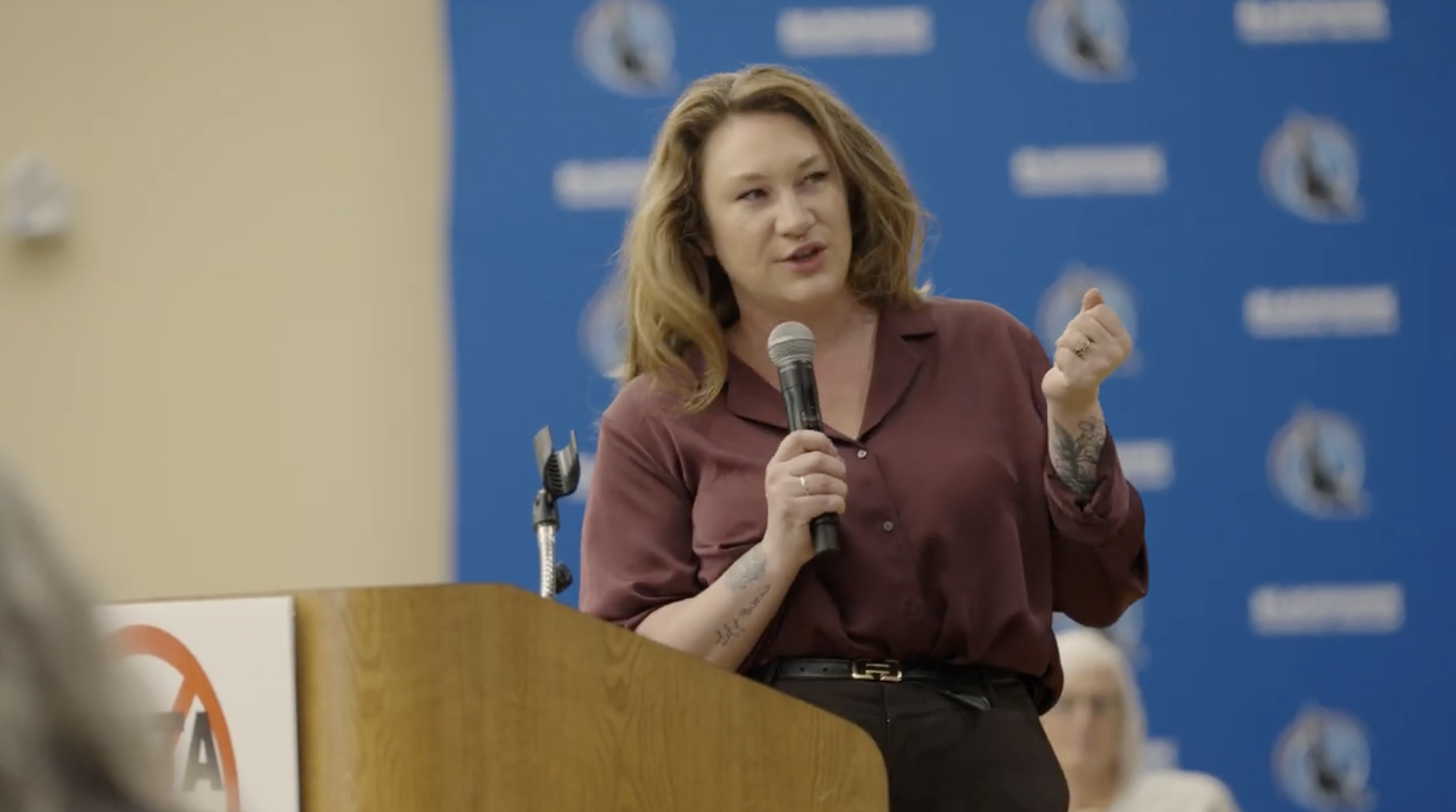
Want to learn more or bring WARD to your community?
Reach out if you are interested in organizing a community meeting, inviting a speaker, or learning more about the proposed BECI 765-kV project and what it could mean for your area.
Tell us what is happening in your community, what questions you have, and how WARD may be able to help.
For media inquiries:
WARD is supported by community donations.
We never want cost to prevent a community from reaching out. If you are in a position to help sustain this work, you can support WARD here.
Images are by Joshua Mayer, Hunter Riley, no765line, Midcontinent Grid SolutionsInformation sourced from Midcontinent Grid Solutions, Wisconsin State Statutes, Public Service Commission of Wisconsin, no765line, WARD's own work, MISO.